Landing in Shanghai
Reflections on China, Part 1
It all started with a poster:
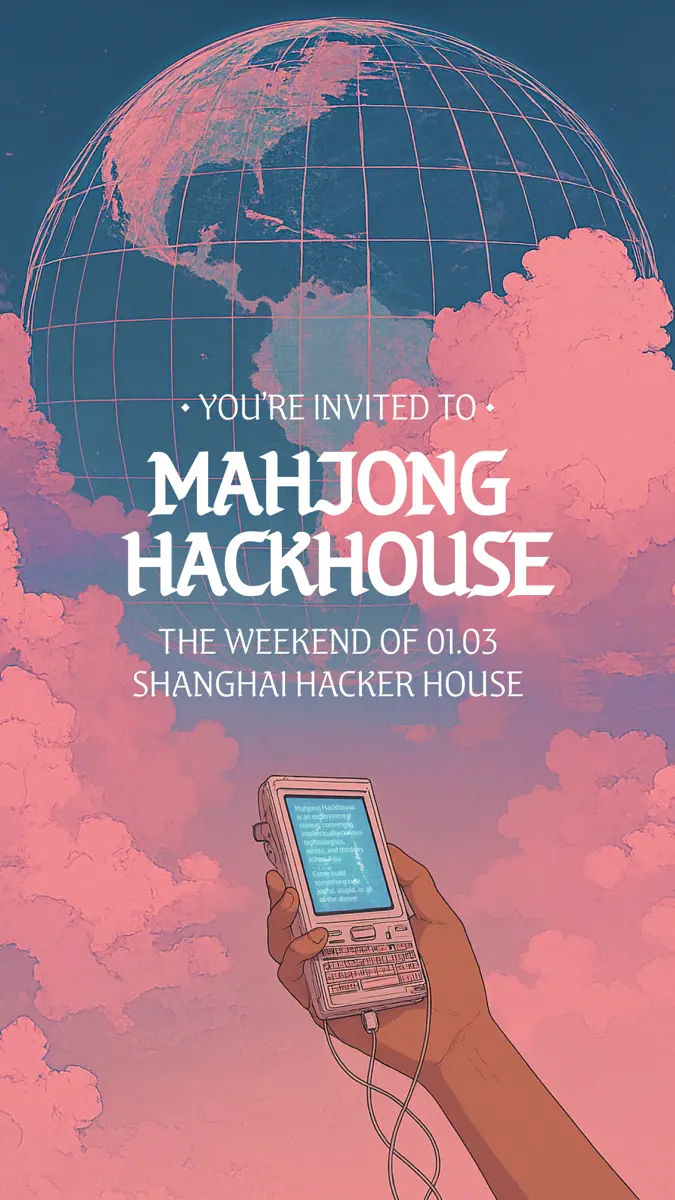
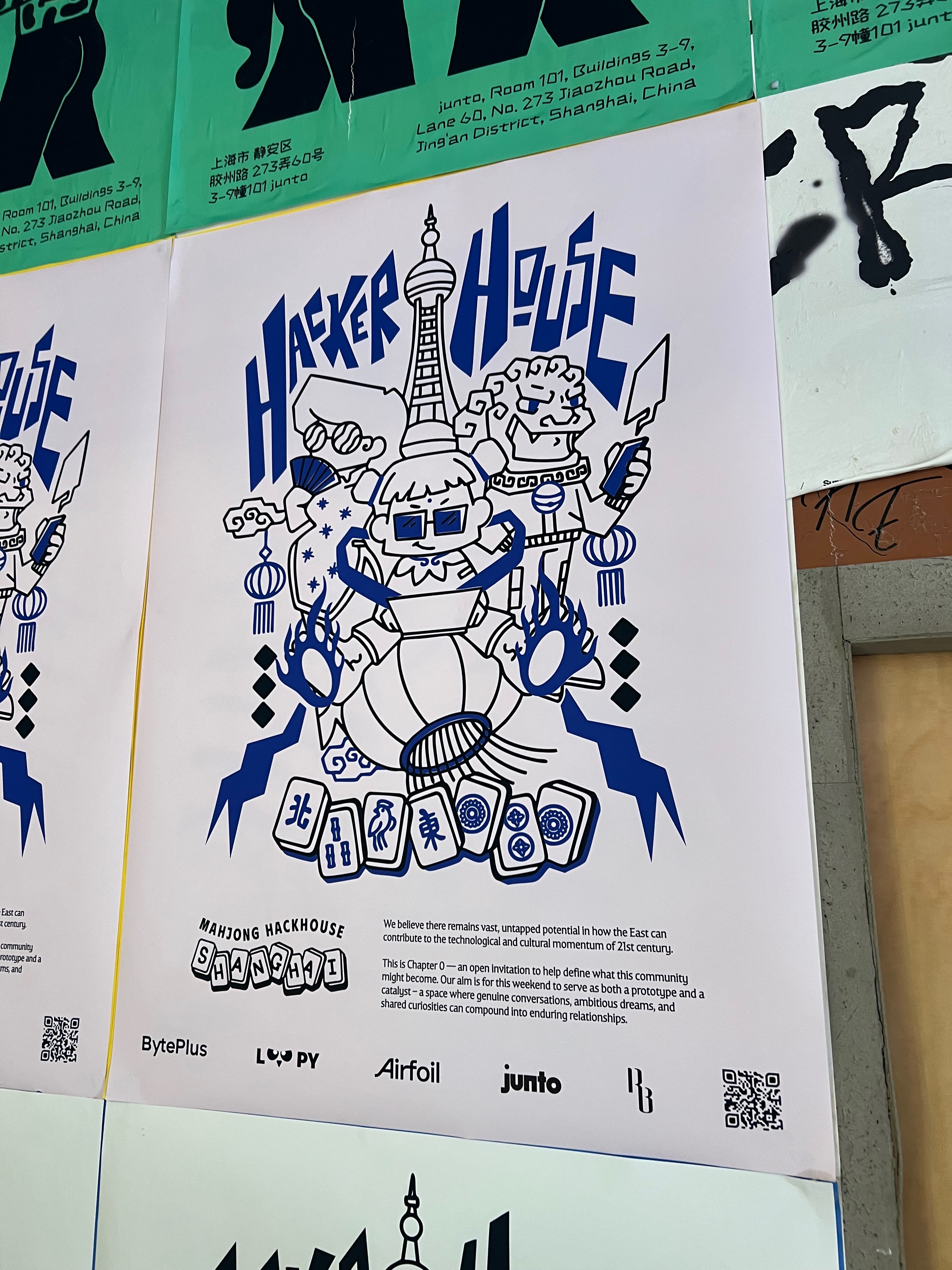
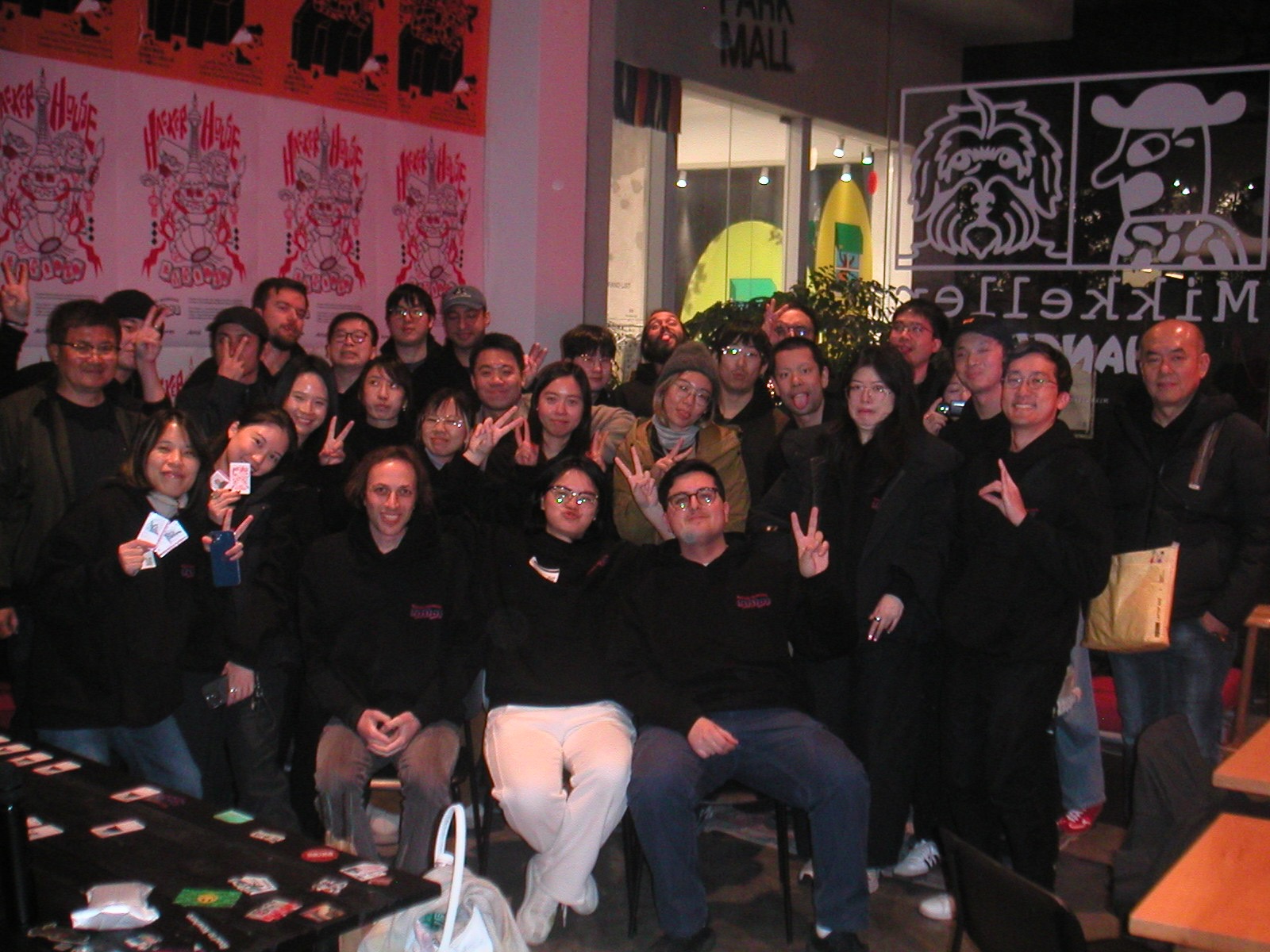
My friend Weiwei invited me to Mahjong Hackhouse, “a space where genuine conversations, ambitious dreams, and shared curiosities can compound into enduring relationships”, with a stated goal of letting attendees “walk away knowing each other, trusting each other”. I couldn’t resist. Damn my mid-December house move with pneumonia, I was going to China. Plus CJ was going too.
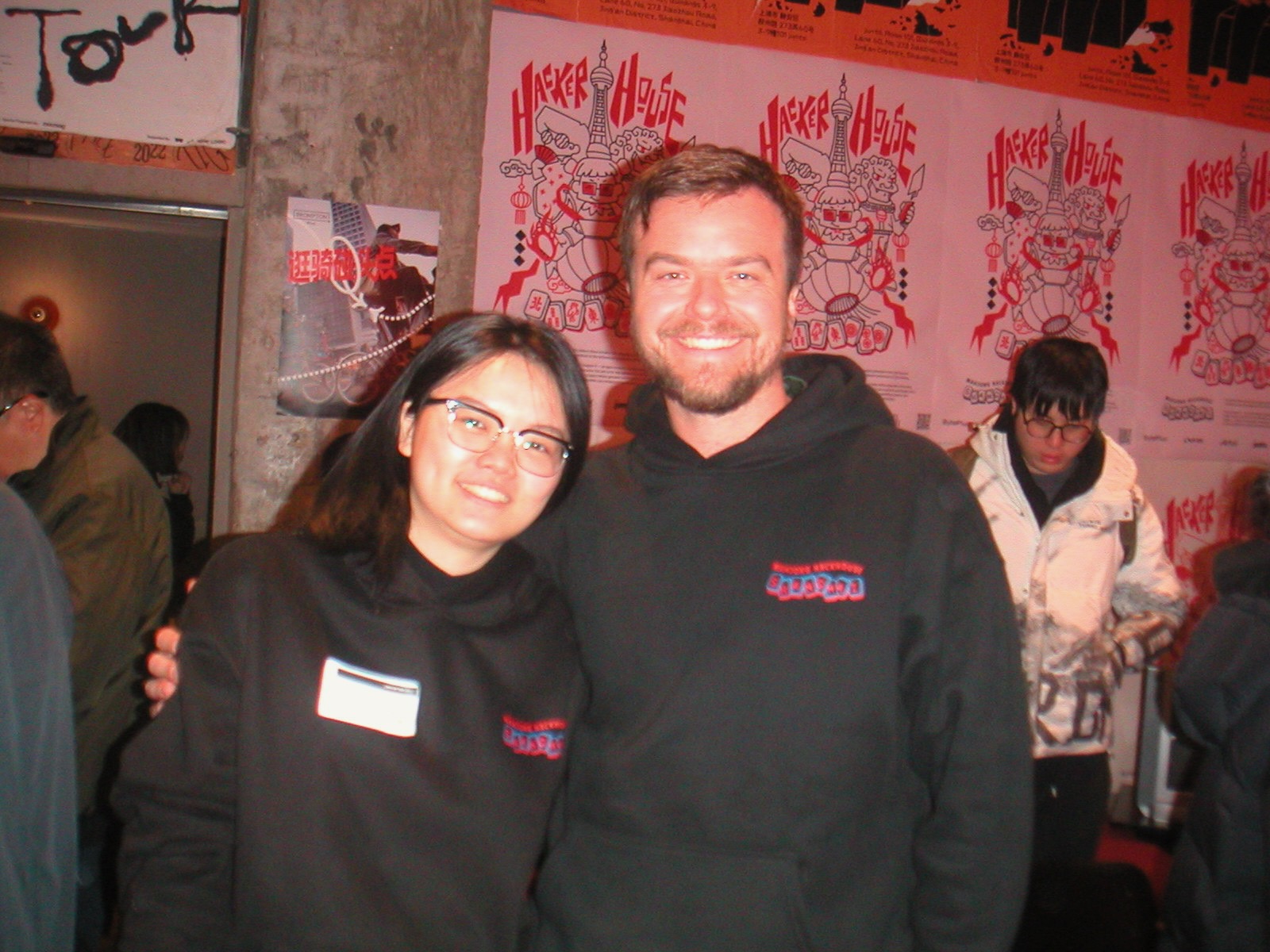
I’m grateful for Weiwei, Phil, and Rob for organizing this event, creating a soft landing for us to be able to hit the ground running there. They artfully created an intentional container for people from a diversity of places and backgrounds to learn from each other and have meaningful conversations. I met wonderful people from China, Singapore, Taiwan, Vietnam, quite a few people who split their time in between, and a smattering of Americans curious to learn and understand more about how this side of the world works. I even met someone born in Boulder!
Afterwards, a crew of 10 or so of us headed to Shenzhen to attend the Scalable HCI Research Symposium, created to “cross pollinate dialogues on Hardware in Human-Computer Interaction (HCI), while showcasing Shenzhen’s potential as a global innovation hub”. So I figured, I’m already all the way out there - why not. This ended up being another fantastic chapter, allowing me to get much closer to how physical electronics get built in a way that I’ve never had afforded in the states and meet more talented, creative people.
first impressions
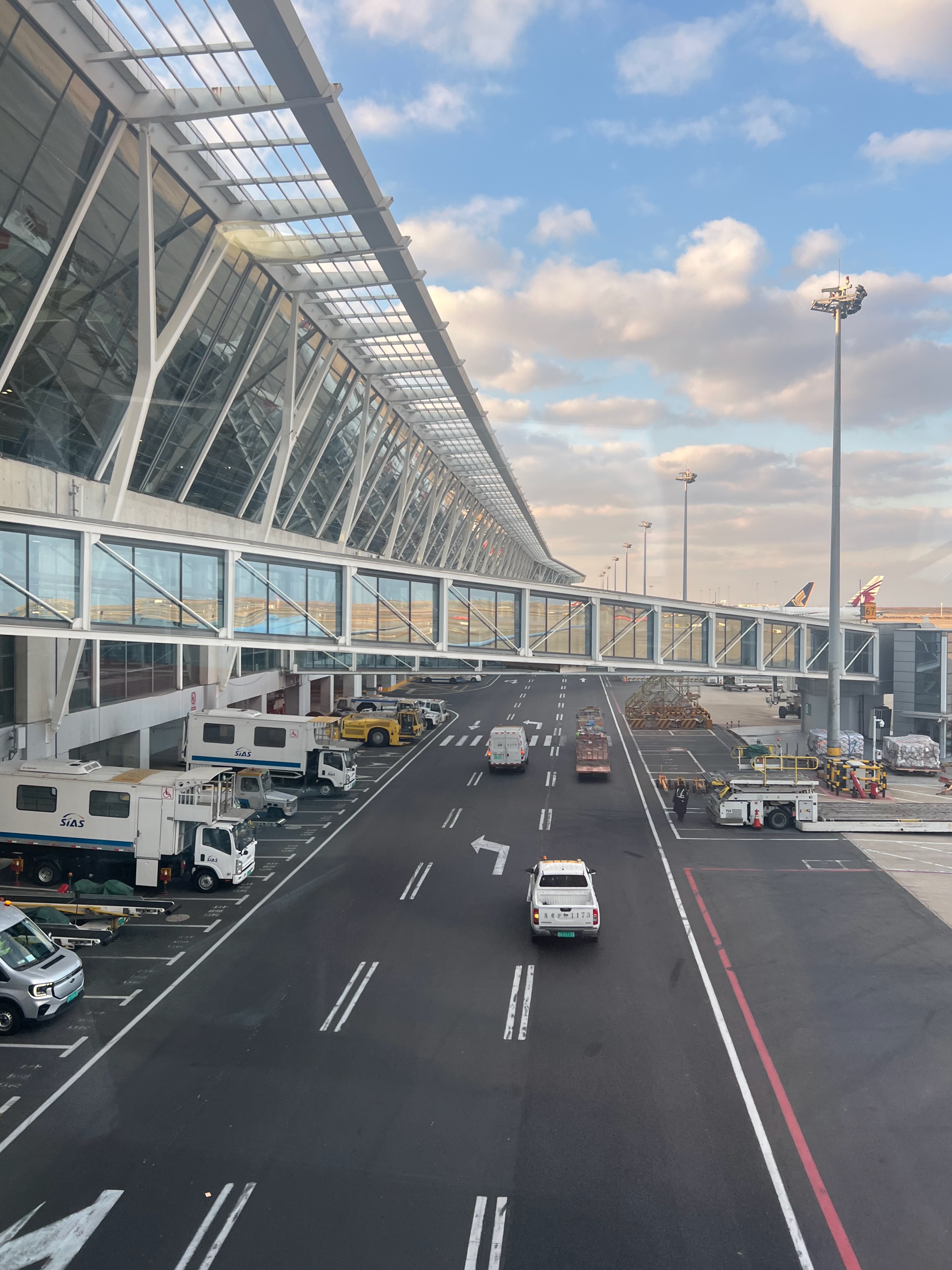
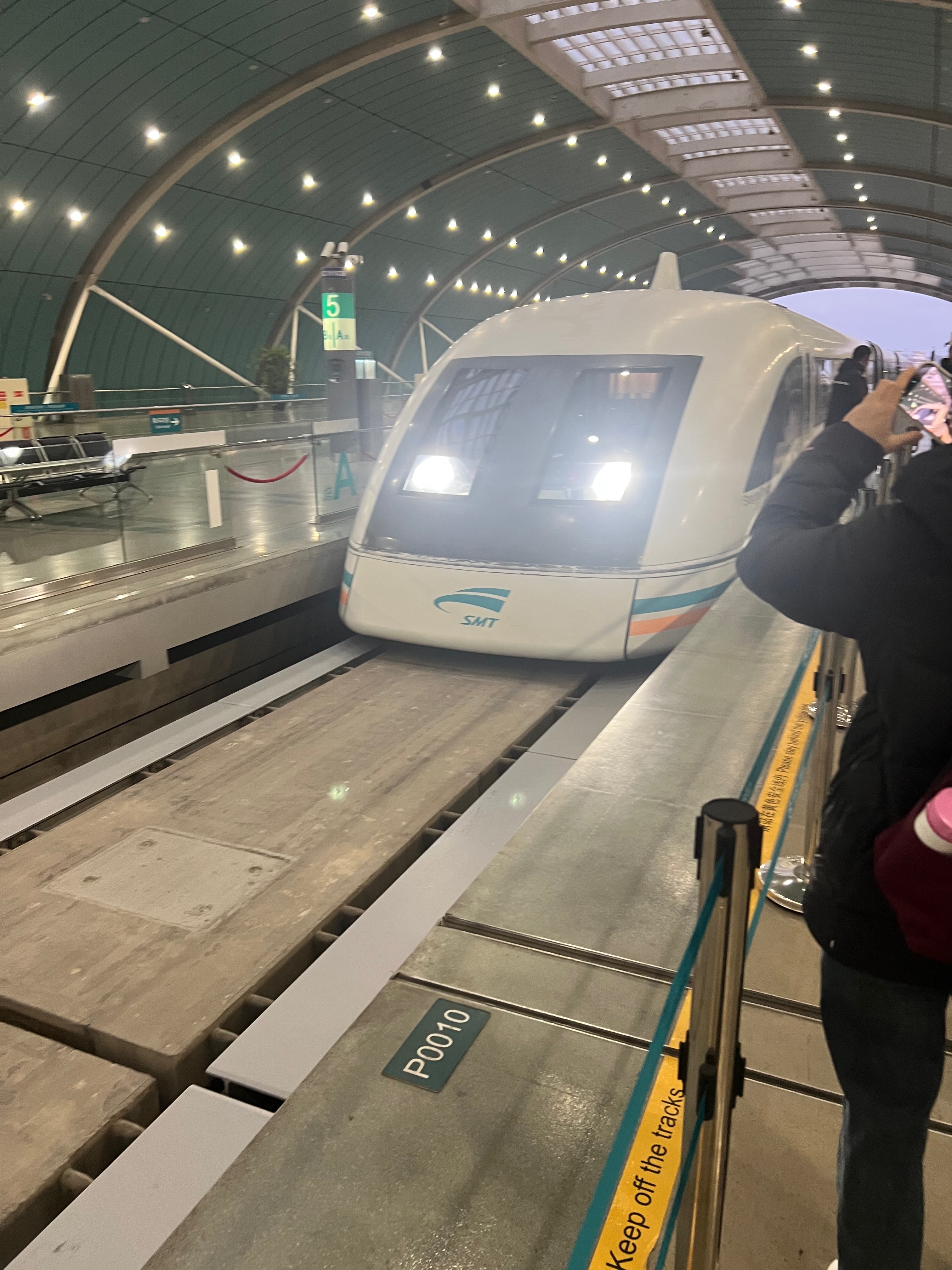
The scale and speed of Shanghai are mind-boggling, which follows given it needs to functionally support 24 million humans. After a kind worker helped me tap the right buttons on Alipay without either of speaking the other’s language, I got onto the maglev from the airport to downtown where it hit 300kmh and made my train-loving heart sing (and weep a little). Transferring to the subway was easy; the subway itself was clean, fast and functional; really the primary qualities one looks for in a subway. Infrastructure that works!
The hierarchy of transportation is a bit different than what I’m used to: cars, trucks, mopeds, and a few brave bikes share the roads. Meanwhile countless more electric mopeds, automated trash robots, more bicycles, densely parked mopeds, miniature three-wheeled maintenance trucks, stationary food vendors, and us squishy humans walking around all share the sidewalks; inviting (or rather, demanding) a sense of spatial awareness I have only felt fast-walking through Times Square or on a moped in Bali.
It was also cold! I got off the plane in a hoodie and shorts, Colorado-style. I learned this was not the Shanghai-style as I stepped into a windy 30-degree-and-falling night where everyone but me was in some sort of puffer jacket, hats, gloves, and pants. Oh the looks I got.
When I got to our fancy kick-off dinner venue, I had the sense to go to the bathroom and change into nice pants. Standing there, pants in hand, waiting for a stall a cleaning lady looked me up and down disapprovingly, pointed to my shorts, and waved her arms at the sky and said some things in Chinese. I couldn’t understand a word she said but I got her message clear as day.
The biggest culture shock for me was the apps, specifically Wechat and Alipay. These are essentially one’s keys to China: between one of these and a ride hailing app called Didi, I was good. I’d heard things like “Wechat is a superapp” but I didn’t quite know how to understand that. Particularly as a technologist who builds apps, how on earth do you align everyone into a single app, that solves for all the different use cases? How do you design such a thing? More on this later.
the Mahjong Hackhouse #
I didn’t know what to expect for this weekend but I trusted Weiwei and showed up in Shanghai - apparently this was a rather shared experience among much of the group. It was an insightful & jam-packed weekend. We got to hear from a bunch of people with real-world experience building in and for China, as well as from people who are building across both west and east and their reflections on the contrasts and similarities.
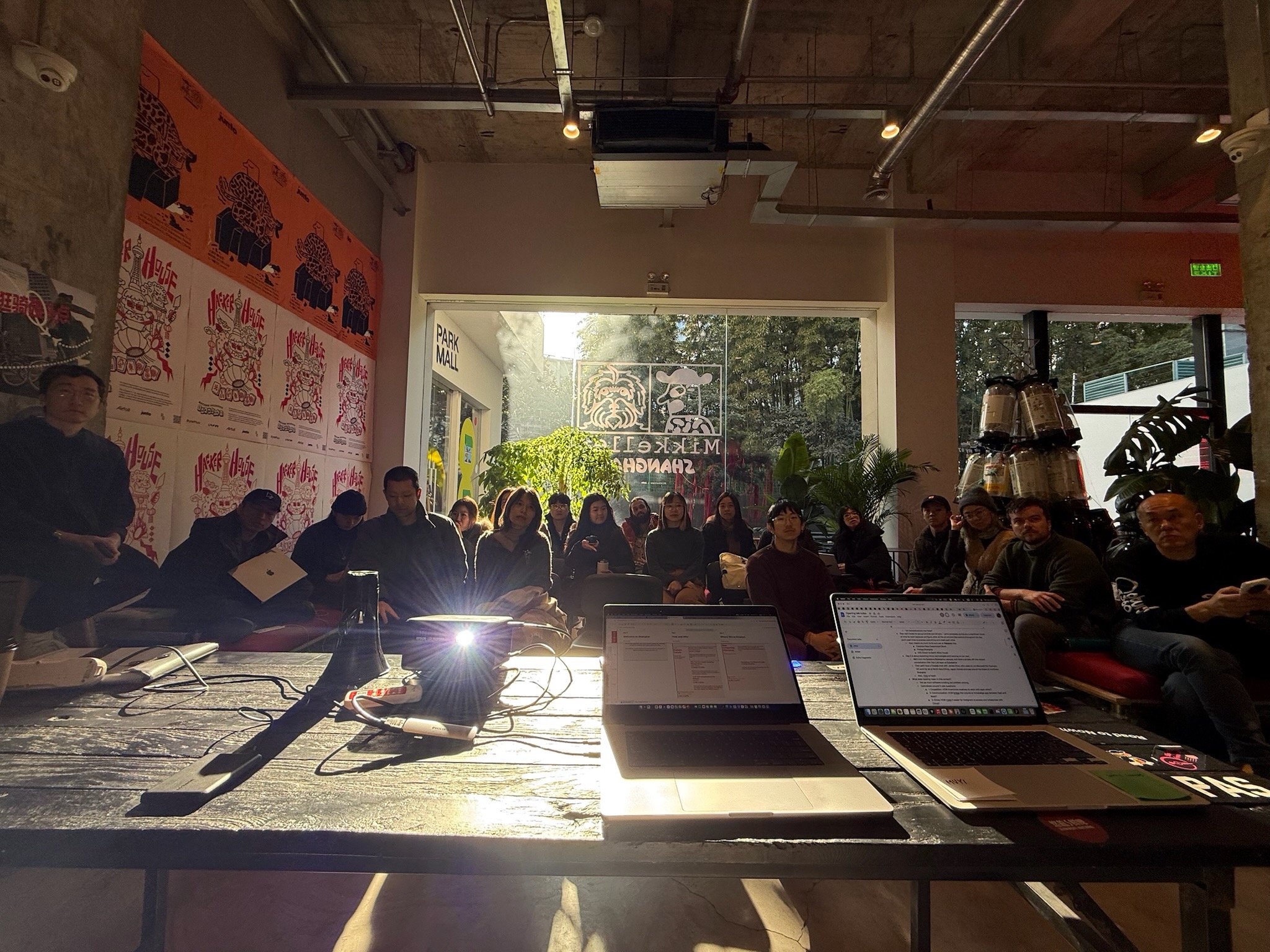
There was David Li, who created the first hackerspace in China and shared his reflections on building with Shenzhen factories; Phil Hedayatnia talked about Silicon Valley and its growing counterparts in the East (interesting timing just as Manus AI is scooped by Meta for $2B via a hasty Singapore relocation), Kelin Zhang about building Poetry Camera with Chinese suppliers and the economics and learnings of that journey, and Xiaowei Wang spoke about her experience in TaoBao villages and their influence on bringing the economy to rural villages instead of having people leave their hometowns.
I didn’t have enough brain cells to actually build something but I spent my hacking time deep in conversation about what it’s like to work in America vs China, the idea of “default paths”, cultural pressure to stay in that path vs the ability to leave it to define something for one’s self; and then we turned our conversation into a poem with the help of Gemini. Other groups presented their own creations and findings, like experiments finding the edges of Wechat’s QR scanning, Matthew and his iMessage sticker generator, and Spencer showing his website rebuilt using the Wechat HTML spec.
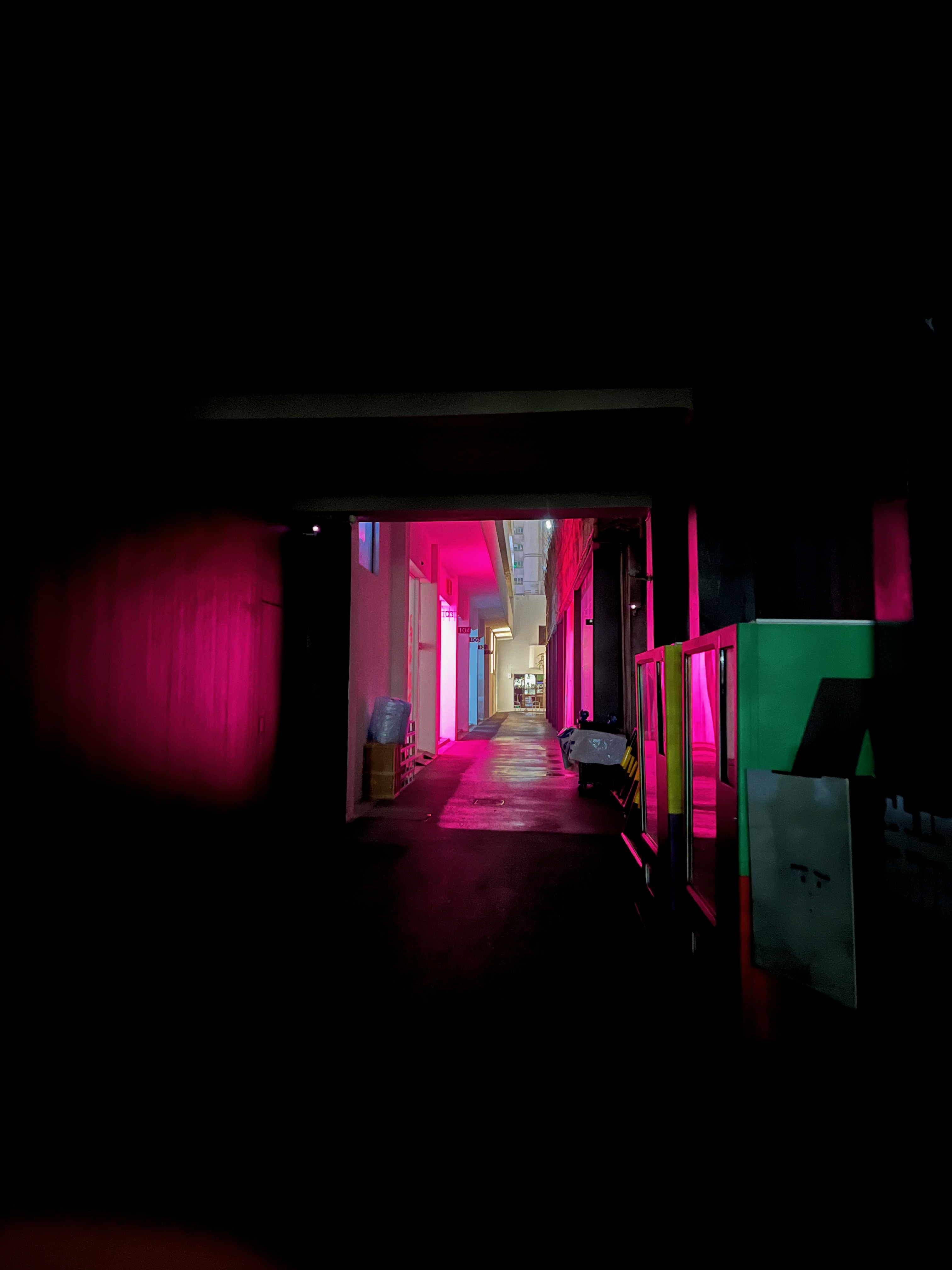
The whole event was a blend of people presenting, breakout groups for talking & building, and going out together for food/exploring. Most of us were staying in the same hotel (Ginco - thank you Bytedance for sponsoring; would stay again) which was a 2-minute walk from Junto, a super vibey craft beer / creative space that served as our main venue (there was a peanut butter and jelly beer that was out of this world).
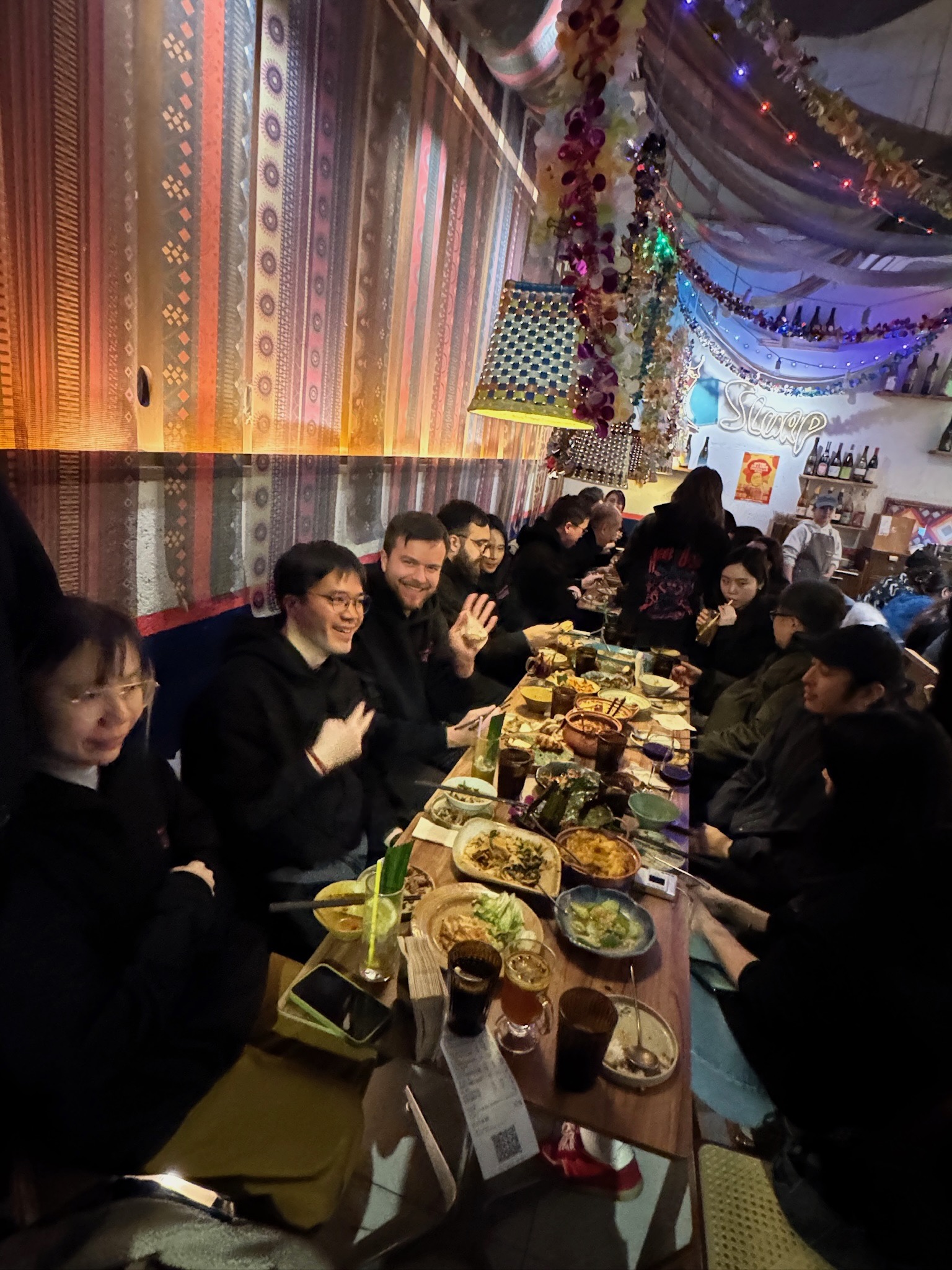
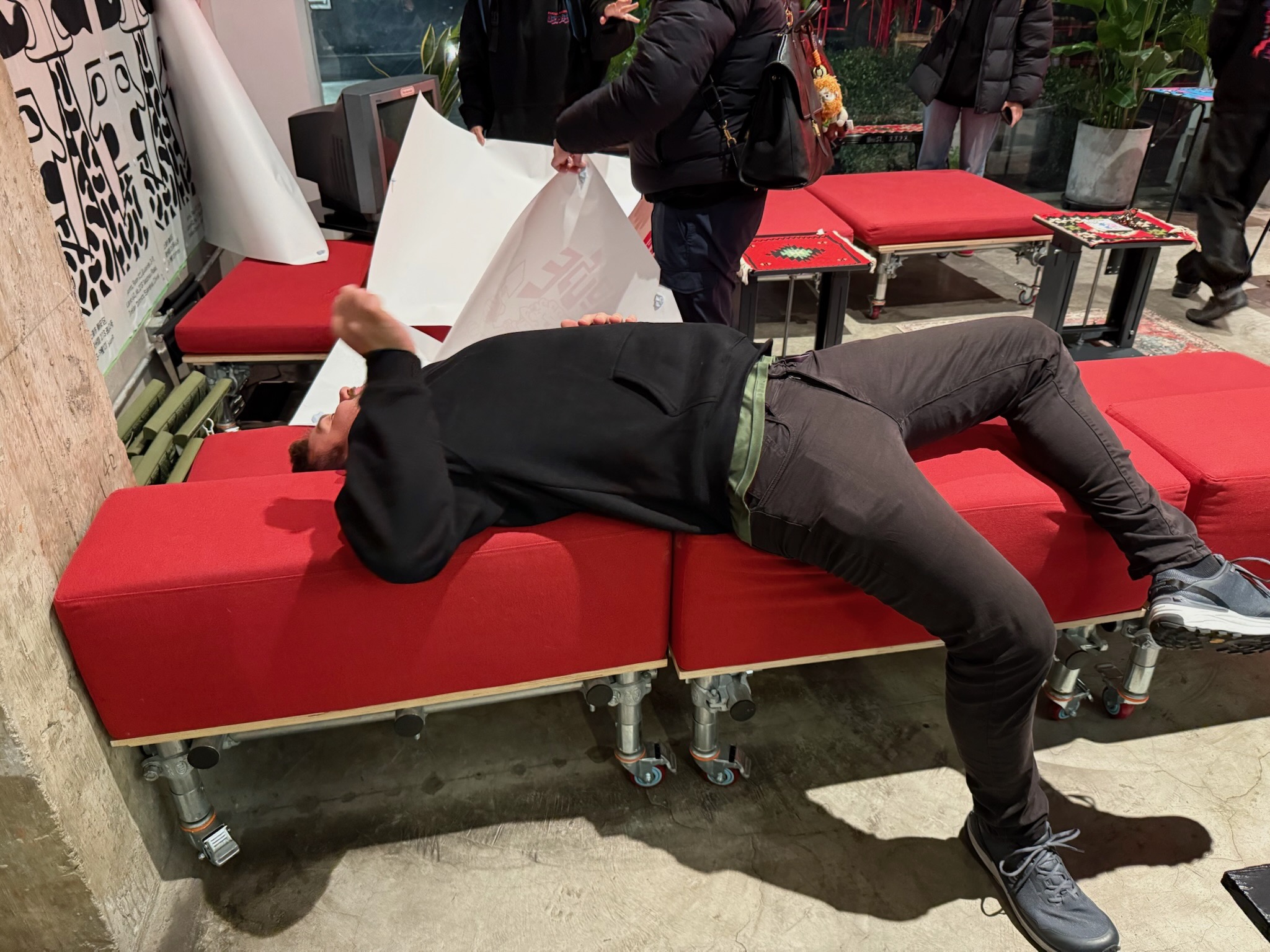
Between the spontaneous conversations and serendipitous encounters, being in a foreign country, late nights & early mornings, near-constant new stimulus, and a bunch of friendly, curious people – the end result felt like an intense adult summer camp that undoubtedly achieved its goal of new trusted friendships and seeding future collaborations.
Ordering food in the superapps #
Wechat’s scale and reach were not overstated: from a $0.50 cent transaction buying water to ordering food delivery via Meituan to placing a factory order of ePaper displays: there is a common protocol involving someone scanning someone’s qr code and it’s fast and easy (mostly). Whether it works well for an individual depends on a few factors: do you have a foreign or a domestic phone number, and how much translation do you need to know what’s going on?
Tip screens, like the Square cash register flow in the US don’t really seem to be a thing - I don’t think I saw one the entire trip.
Most meals works differently than at restaurants in the US. When you enter a restaurant, if you see an empty table you sit down and scan the QR code for the table or for your seat specifically. (God help you if all four ignorant tourists scan the same QR code and then everyone’s apps fight with each other for the source of truth on the cart items - lesson learned the hard way).
Scanning the code opens up an in-app browser sort of thing (still inside Wechat or Alipay):
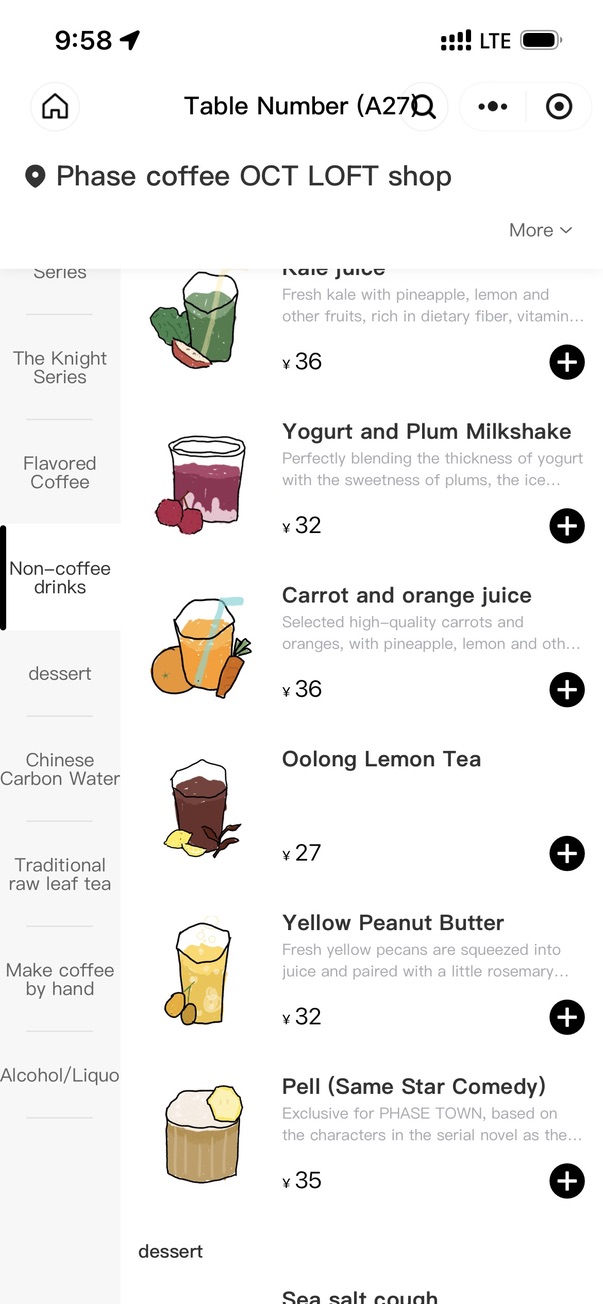
Most pages can be automatically translated into English by Google Translate (built into the app itself, super helpful!), though it’s not perfect: it takes one or a couple seconds to load, not every text element in the app can be translated, and if you’re scrolling through pastries too fast you might hit a “translation frequency limit exceeded”, basically saying ‘chill bro’. You add your selections to your cart, check out (paying with the app itself) and some minutes later the food arrives at your table, simple and easy.
Interestingly this experience is almost more foreigner-friendly than the traditional experience I’ve had in most of the rest of the world. However - it is mediated almost entirely by a digital interface which feels alienating at times (even as a technologist) – should something as core to the human experience as food remove part of that human experience in favor of efficiency and standardization? I’m not sure.
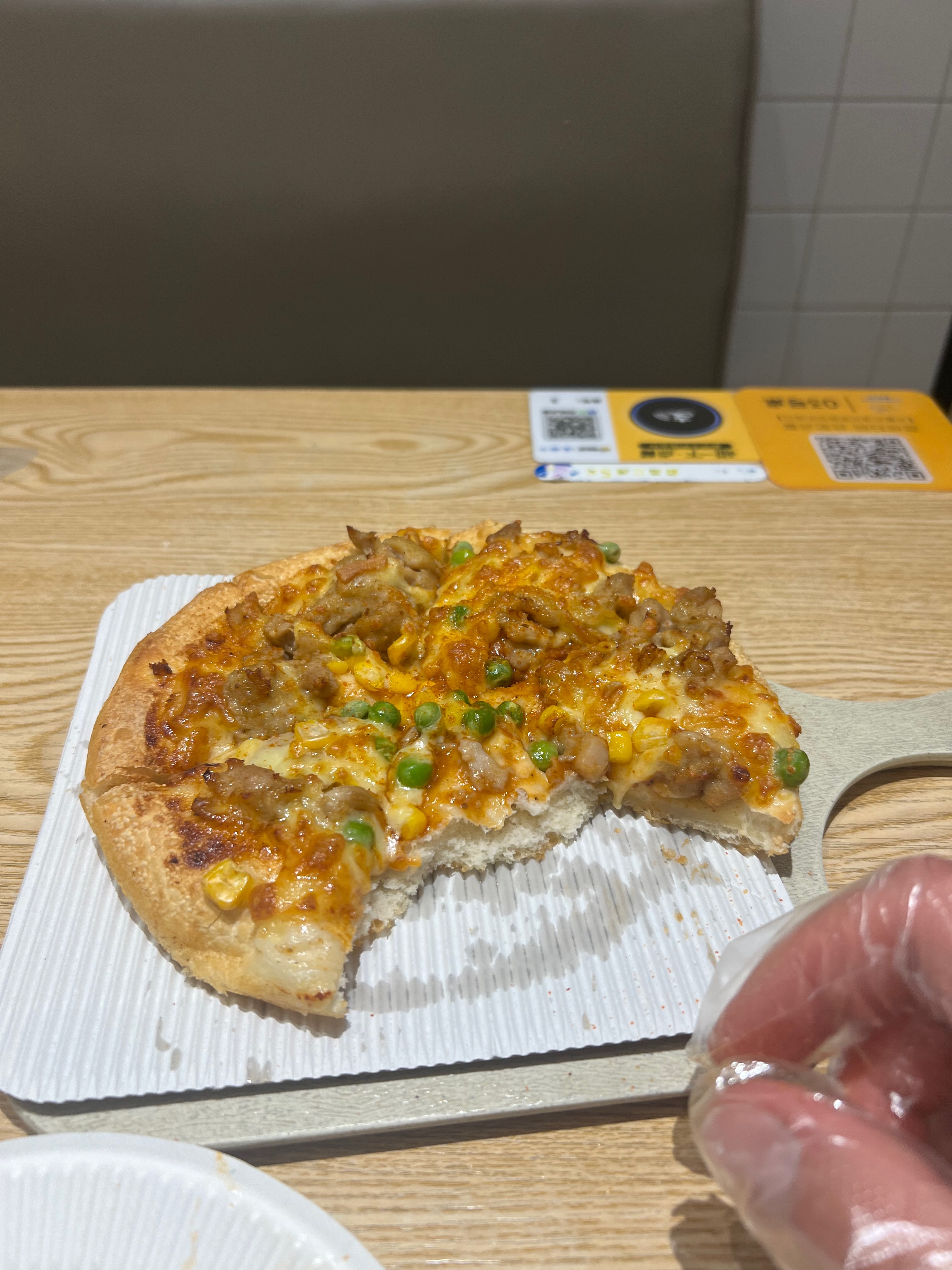
At times I was grateful for this (lack of) interaction - particularly in the morning, before I’ve had my coffee and booted up fully. At other times though, waiting on my order that seemed to get lost in the system somewhere, I felt entitled yet confused, hunting down my lost order with google translate in hand, food that was mine because I tapped some buttons on a screen that I could not actually understand, my only recourse to communicate through yet another system that translated my words into another language. (Of course, I recognize that learning to speak Mandarin would help everything here technology or no technology; goals, goals!)
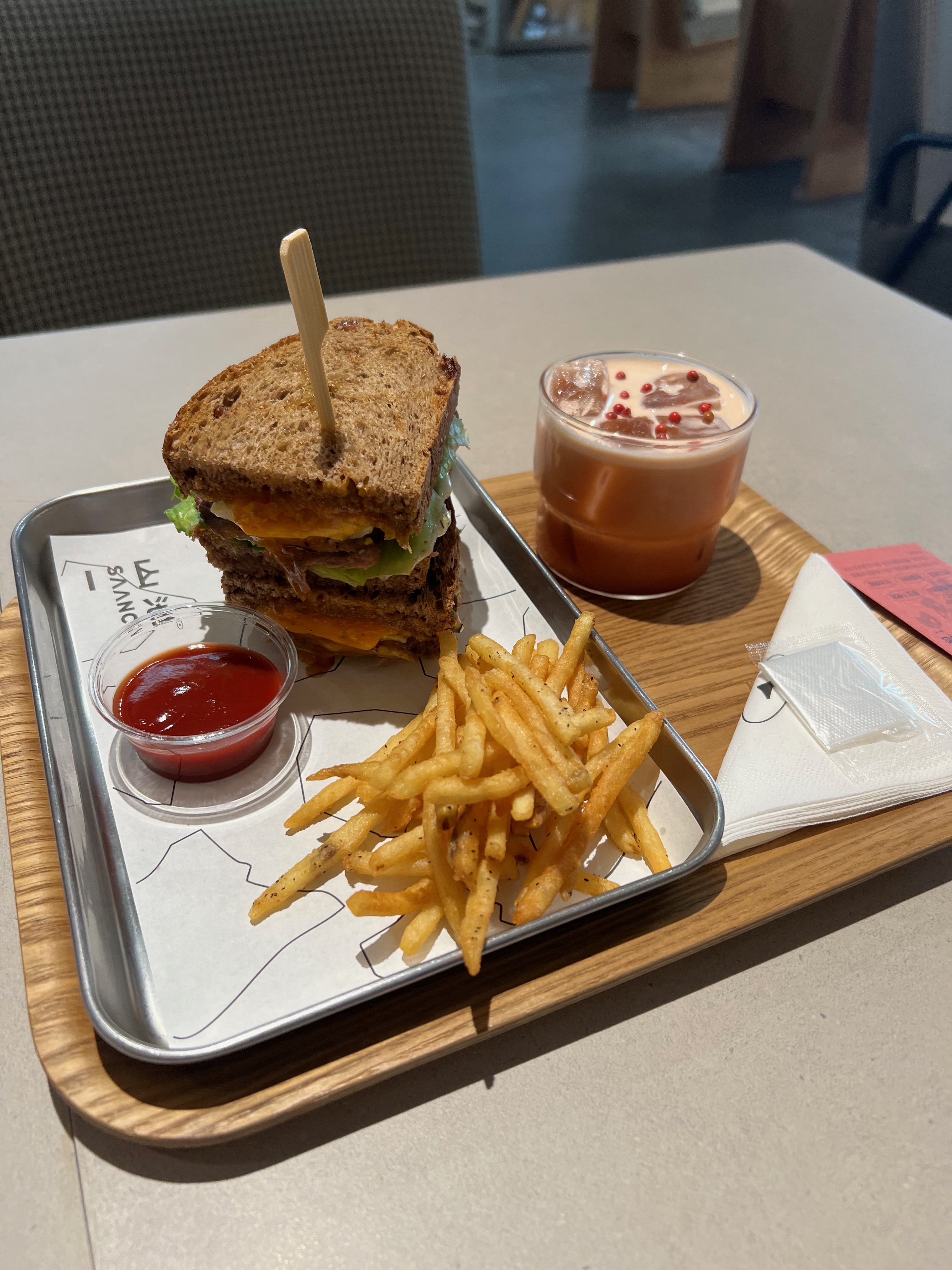
It’s also important to note that although there were a few times where the apps just would not cooperate causing me maximal frustration. But it was at those moments someone would help me: a friend with a Chinese number, an employee of the store, or a random person like the security guard at the train station. Despite the ubiquity and scale of the digital layer, the social layer still exists at the margins because ultimately, people are people and they want to help each other despite the symbols glowing on a digital screen.
buying grapes at Walmart
At some point CJ needed some cleaning supplies and I needed deodorant. We were walking around when we came across a Walmart, and thought, this should be interesting! The shopping experience was mostly as expected; except that instead of looking at signs, text labels, or names of things I was shopping completely by vibe / brand colors / shape of the thing in the package / general proximity to other, related products. Somehow I realized, even in Central and South America, so many of the things were still branded/labeled in English. Not so here.
We soon found everything we needed except for my deodorant (it would be a few more days still until I successfully completed that quest) so we headed towards the checkout area. We saw the self-checkout and figured, we’re technologists! Of course can figure this out.
Oh was it a struggle. As mothers pushing strollers and literally everyone else breezed past, we stood there like idiots, trying to decipher the strange beeps, errors, and flashes coming from the machine. CJ was holding down the QR code/payment side of the effort while I had Google Translate Camera pulled up aimed at the screen, the surrounding signs, and anything else that might shed a clue as to what wasn’t working.
After considerable effort (it turns out you don’t need a Walmart account to check out, also there are different types of QR codes on things and only one of them scans correctly) we managed to pack all of our things into a big bag and, somewhat humbled, headed for the exit. As we passed the doors, an alarm buzzer blared. An elderly man in a Walmart uniform, a rather bored expression on his face, ushered us gently towards a woman waiting near a giant blue bin. She motioned for me to put the bag into the bin, and I did.
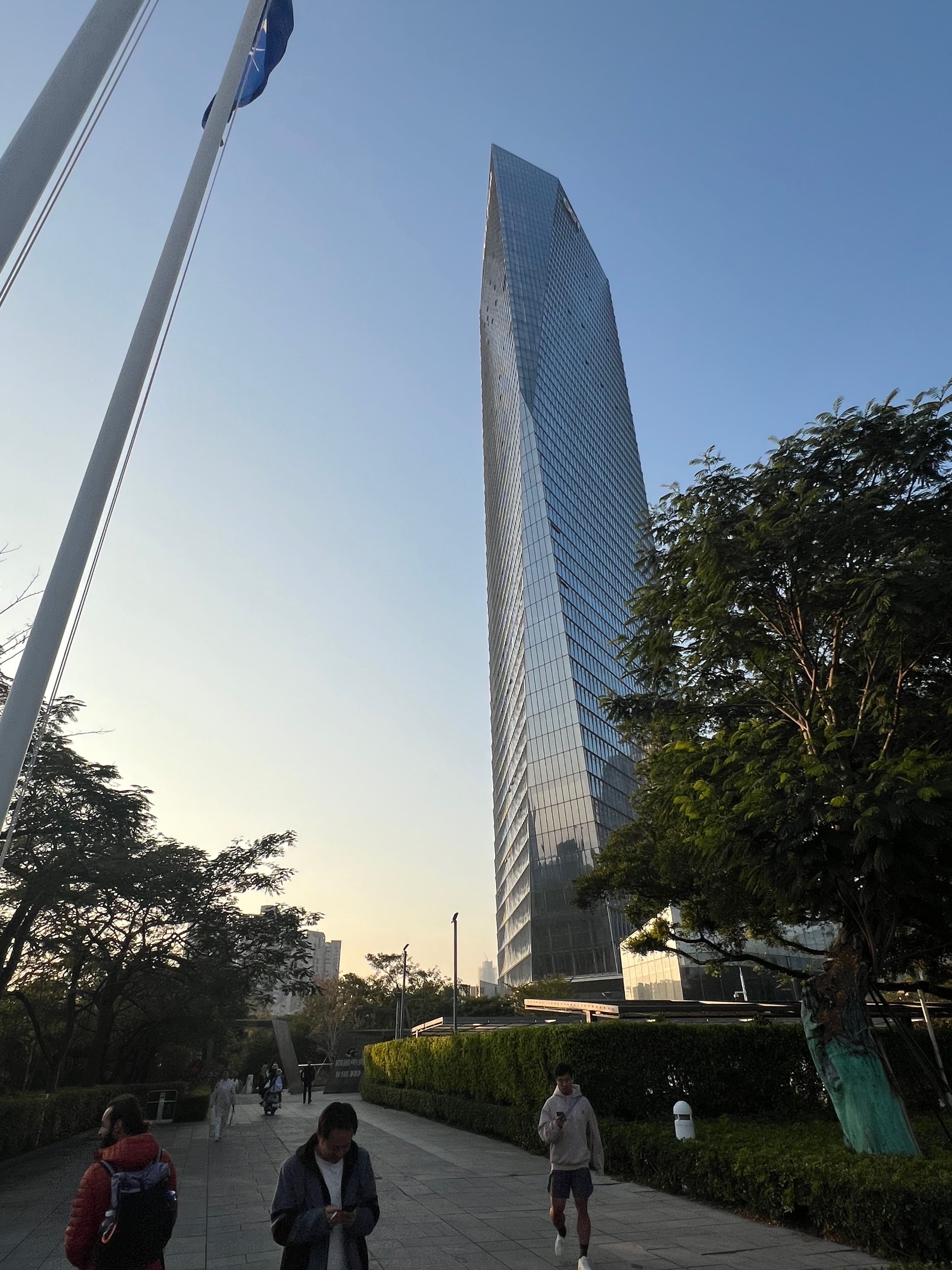
We all stood there a few seconds, no one particularly miffed. Nothing really happened - no discernable beeps or numbers or scanning. She motioned at me to take it out, and deducing that we were free to try again, we headed towards the exits. Everything was calm. We stepped out into the setting sun and found a nearby bench under a skyscraper to process the experience we had just had.
Sitting there eating our grapes that looked like they might’ve been grown in the packaging box itself (albeit rather pleasant-tasting), the dehydration, the cultural whiplash, and the intensity of the prior 9 days caught up to me; bringing on a lightly psychedelic bewilderment at indeed just how very far away from home I was, how cool it was that I was here with a good friend, just wandering around trying to buy some grapes and laughing at our own struggles.
next up
I think this is gonna be a two-parter. In the next installment, I’ll be talking about Shenzhen, touring factories, the Huaqiangbei market, building tools to help me navigate China, and my attempt at freeing myself from the experience of a +1 phone number.
Subscribe via email or RSS or just check back in a week or two.